Dashboard Indicator Light Meanings: Essential Guide
Dashboard lights are your car’s way of speaking up before a small issue becomes a breakdown, safety problem, or expensive repair. Some lights simply tell you a system is on, while others mean you should stop driving as soon as it is safe. This guide explains common dashboard indicator lights meanings in plain language, with practical next steps for drivers who want to respond calmly and confidently.
What do dashboard lights mean?
Dashboard lights mean your vehicle has detected a condition you should know about, ranging from a normal system indicator to an urgent mechanical or safety warning. The fastest way to understand them is to look at the color, whether the light is steady or blinking, and what system the symbol represents.
In general, red warning lights on dashboard panels deserve immediate attention. A red oil can, brake symbol, or temperature light can point to a condition that may damage the vehicle or affect your ability to drive safely. Yellow or amber lights usually mean caution: the car may still be drivable, but it needs service, inspection, or a diagnostic scan soon. Green, white, or blue lights are often informational, such as headlights, cruise control, or high beams being active.
Blinking lights raise the urgency. For example, a steady check engine light can have many causes, but a blinking one often indicates a more serious engine misfire that should not be ignored. If you are unsure, your owner’s manual is the best reference for your specific make and model, and a trusted technician can help confirm the car lights meaning with proper diagnostic tools.
The difference between warning lights and indicator lights
Not every symbol on your dash means something is wrong. Some dashboard indicator lights are simply confirming that a system is active. Others are car alert lights, warning you that a system needs attention or that driving conditions may be unsafe.
A good rule is to separate lights into three categories:
- Normal indicators These tell you a feature is turned on. Examples include high beams, turn signals, fog lights, cruise control, or certain driver-assist features. They usually do not require repair unless they stay on unexpectedly or behave differently than normal.
- Service-needed alerts These auto warning lights suggest the vehicle should be inspected soon. Examples include the check engine light, tire pressure light, ABS light, airbag light, or traction control warning. You may be able to keep driving for a short time, but you should not ignore them.
- Stop-now warnings These indicate a possible immediate risk to the engine, braking system, or safe operation of the vehicle. Oil pressure, brake system, overheating, and charging system warnings can fall into this group. If one appears, pull over safely, shut the vehicle off if needed, and get help.
The tricky part is that symbols can look similar. Many drivers confuse the tire pressure light with other circular warning symbols, and brake lights can appear for several reasons. That is why it helps to learn the most common signs before they appear during a stressful drive.
Critical lights you should never ignore
Some lights matter more because they can affect whether your car stops, steers, charges, or keeps the engine protected. When these warnings appear, treat them as your vehicle asking for prompt attention.
Check engine light
The check engine light is one of the most common and least specific warning lights. It can point to something simple, such as a loose gas cap, or something more involved, such as ignition, emissions, sensor, or engine performance trouble. Because the range is so wide, guessing is not the best approach.
If the light is steady and the car feels normal, check that your gas cap is secure, then schedule a diagnostic scan. If the light is blinking, reduce speed, avoid hard acceleration, and stop driving as soon as it is safe. A blinking check engine light can signal a condition that may damage the catalytic converter or engine if you continue driving.
Oil pressure light
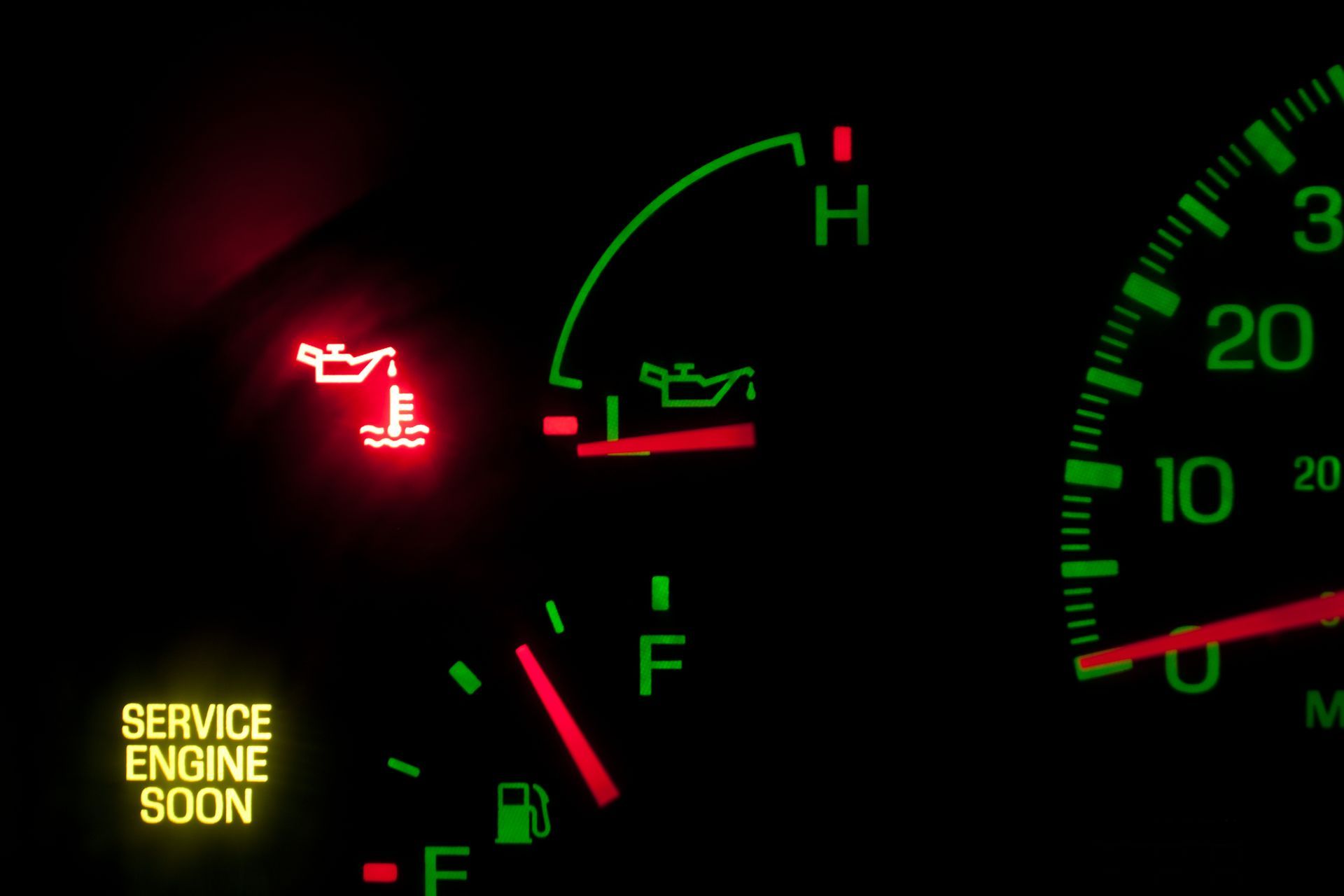
The oil pressure light often looks like an oil can. This is not the same as a routine oil change reminder. It may mean the engine does not have enough oil pressure to stay lubricated.
If this light comes on, pull over safely and turn off the engine. Check the oil level if you know how and it is safe to do so. If the level is low, adding the correct oil may help, but you should still have the vehicle inspected. If the light remains on, do not keep driving, because low oil pressure can quickly lead to serious engine damage.
Brake warning light
A brake warning light may mean the parking brake is engaged, the brake fluid is low, or there is a fault in the braking system. Start with the simple possibility: make sure the parking brake is fully released. If the light stays on, take it seriously.
Brakes are not an area for “wait and see” driving. If the pedal feels soft, the vehicle pulls when braking, you hear grinding, or the warning appears with other brake-related symptoms, stop driving and call for help. If the car feels normal but the light remains on, have it checked as soon as possible.
Battery or charging system light
The battery light does not always mean the battery itself is bad. It often points to a charging system problem, such as an alternator, belt, wiring, or connection issue. Your vehicle may continue running for a while, but it could lose electrical power once the battery drains.
When this light appears, turn off unnecessary electrical loads such as heated seats, extra chargers, and climate settings if safe. Drive directly to a repair facility if the vehicle is operating normally. If lights dim, steering becomes heavy, or electronics begin failing, pull over safely.
Temperature warning light
An engine temperature warning means the engine may be overheating. Continuing to drive an overheated vehicle can cause major damage. Turn off the air conditioning, turn on the heater if you can tolerate it, and pull over safely.
Do not remove the radiator cap while the engine is hot. Steam and pressurized coolant can cause burns. Let the vehicle cool and arrange service, especially if you see steam, smell coolant, or the warning returns after restarting.
Which lights mean you can keep driving for a short time?
Some warning lights allow limited driving, but “limited” is the key word. If the vehicle feels normal and the light is amber rather than red, you can often drive carefully to your destination or a repair shop, then schedule service promptly.
Common examples include:
- Tire pressure light: One or more tires may be underinflated. Check pressure soon, especially when temperatures change or before highway driving.
- ABS light: Standard braking may still work, but the anti-lock braking function may be disabled. Drive cautiously and avoid sudden stops when possible.
- Traction control or stability control light: A brief flash can be normal on slippery roads. A steady light may mean the system is off or has a fault.
- Airbag or SRS light: The car may still drive, but a safety restraint system may not work properly in a crash. Schedule inspection soon.
- Low washer fluid or low fuel lights: These are usually easy to resolve, but still important for visibility and avoiding being stranded.
A yellow light is not permission to forget about the problem. It is a window of time to respond before the issue becomes more serious. If you notice rough running, unusual noises, burning smells, smoke, poor braking, or steering changes with any warning light, treat the situation as urgent.
A quick decision checklist for drivers
When a light appears, you do not need to panic. You do need a simple process. Use this checklist to decide what to do next:
- Look at the color. Red means stop or act immediately. Yellow or amber means caution and service soon. Green, white, or blue is usually informational.
- Notice whether it is blinking. Blinking often means greater urgency than a steady light.
- Check how the car feels. Rough idle, loss of power, soft brakes, overheating, smoke, or burning smells are signs to stop.
- Reduce stress on the vehicle. Slow down, avoid hard acceleration, and turn off unnecessary electrical loads if the battery light is on.
- Pull over safely if needed. Choose a safe shoulder, parking lot, or well-lit area. Do not stop suddenly in traffic unless the vehicle is unsafe to continue.
- Review the owner’s manual. Symbols vary by manufacturer, so the manual gives the most accurate description for your car.
- Get a professional diagnosis. A scan tool and inspection can identify the cause instead of relying on guesswork.
This approach helps you avoid two common mistakes: ignoring an urgent light or overreacting to a normal indicator. Both can cost time, money, and confidence behind the wheel.
Tire pressure and everyday alert lights matter too
The tire pressure monitoring system, often called TPMS, is one of the most practical alerts on modern dashboards. Underinflated tires can affect handling, braking, tire wear, and fuel efficiency. If the TPMS light comes on, check tire pressure when the tires are cool and inflate them to the recommended level listed on the driver’s door placard or in the owner’s manual.
If the light flashes before staying on, the system itself may need attention. If the light returns soon after inflation, there may be a slow leak, damaged valve stem, puncture, or sensor issue. A tire professional can inspect the tire and determine whether it can be repaired safely.
Other everyday lights are easy to dismiss, but they serve a purpose. A door ajar light can prevent a dead battery or unsafe driving condition. A lamp-out warning can help you avoid poor visibility or a possible ticket. Low fuel is obvious, but waiting too long can leave you stranded or stress the fuel system.
Why local help can save guesswork
Understanding dashboard indicator lights meanings is useful, but it does not replace proper testing. Many systems are connected, and one warning can trigger another. A technician can read diagnostic codes, inspect the related parts, and confirm whether the issue is simple, urgent, or part of a larger repair need.
For drivers in Bethel Park, Bruce Brothers Tire Pros can be a practical local resource when warning lights on dashboard displays leave you uncertain. Whether you are dealing with a tire pressure alert, brake warning, battery concern, or a check engine light, Bruce Brothers can help move the situation from confusing symbols, to clear next steps.
The most important thing is to avoid guessing for too long. A dashboard light is an early message. Responding at the right time can protect your vehicle, your budget, and your safety.
The takeaway
Dashboard lights are easier to manage when you read them by urgency: red means immediate attention, yellow means service soon, and green or blue usually means a system is active. Pay special attention to blinking lights, oil pressure, brake, battery, temperature, and check engine warnings. When in doubt, drive cautiously, stop if the vehicle feels unsafe, and ask a trusted professional to diagnose the issue before a small alert turns into a major repair.